


File formatting explained
Digital or offset printing?
Your design is ready and can be printed, but how?
There are two options:
1. Digital printing
This printing technique is similar to printing, but in very high quality. The advantage of this technique is that prints can be made very quickly and without preparation. Almost as easy as making your own print at home. The disadvantage is that digital printing is relatively expensive per print. This makes this technique especially suitable for small print runs, for print runs that need to be ready very quickly or for print runs with a lot of variable data.
Digital printing is always printed in CMYK. PMS colours are not possible.
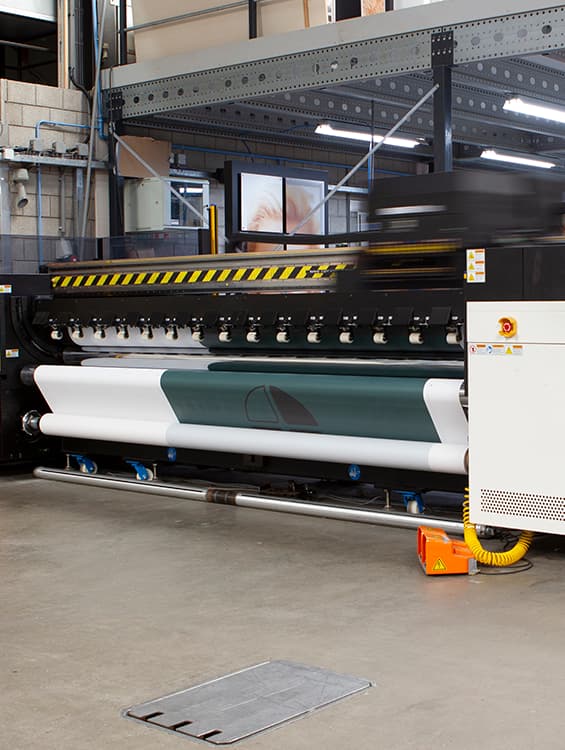
+ Digital rotation printing.
This is a new technique whose process is similar to digital printing, but the paper comes from a roll. This technique is often used for printing labels on rolls, for example. It also allows for variable data.
2. Offset printing
This is the conventional printing technique that requires printing plates to be made first. Offset printing is suitable for large print runs, as the price per print is very low. You do incur the cost of making the printing plates beforehand, which is why this technique is not suitable for short runs.
To be able to produce printings at extra low cost, TVE Group collects similar orders and cleverly combines them in the printing process. In this way, huge savings can be made on the start-up costs per order and TVE Group can produce offset printing at very low cost. Customised orders in special (PMS) colours or on non-standard paper types are possible on request.
+ Offset web printing.
This is the same printing technique as offset printing, but the paper comes from a roll instead of sheets. This allows the print product to be produced at an even higher speed, resulting in a lower unit price.
Offset web printing is used for printing newspapers, for example, but also for very large volumes of leaflets or brochures.
Paper types, you can't see the wood for the trees
Speaking of forests; did you know that all the paper processed by TVE Group has the FSC quality mark and thus comes from responsibly managed forests?
There are quite a few different types of paper, here is a rough overview of the basic groups;
Wood-free Offset (HVO)
This is the standard paper, similar to the paper you have in your printer at home. This paper type is easy to write on, available in various thicknesses and is mainly used for house-style applications such as stationery, envelopes and forms.
Satin MC
Or Satinised Machine Coated. This is rolled paper with a slightly glossy surface. This paper type is not writable, available in various thicknesses and is mainly used for promotional printing such as posters, flyers and leaflets.
Maco/Silk or Matt MC
This is the same paper type as satin MC, but with a matt or semi-matte finish. This paper type is not writable, available in various thicknesses and is mainly used for promotional printwork such as posters, flyers and leaflets. But also for business card printing, for example. In 2022, matt is the trend.
Specials
Such as various recycled paper types, paper types with special finishes such as metallic, etc.
.jpg)
Finishing of your printed material
Your printed material is not given a ‘luxury finish’ as standard, but this is of course possible if required. For example, you can opt for a laminate finish. A wafer-thin plastic layer is applied over the printed material. This gives the printed material a matt or glossy appearance and protects it well.
Relatively new is Soft-touch laminate. The name says it all: this matt laminate has a silky-smooth feel. This makes your printed matter look and feel great.
Looking for something exclusive? Then TVE Group can also finish your printed matter with, for example, gold, bronze or silver foil or with extra-thick Spot-UV. With Spot-UV lacquer, you can make parts of your design glossy while the rest has a matt finish. With the matte/gloss combination, you can create very luxurious and creative effects.